Skip to Content
History of U-M logo
  • Featured Projects
  • Explore Further
  • About
  • Contribute
Search
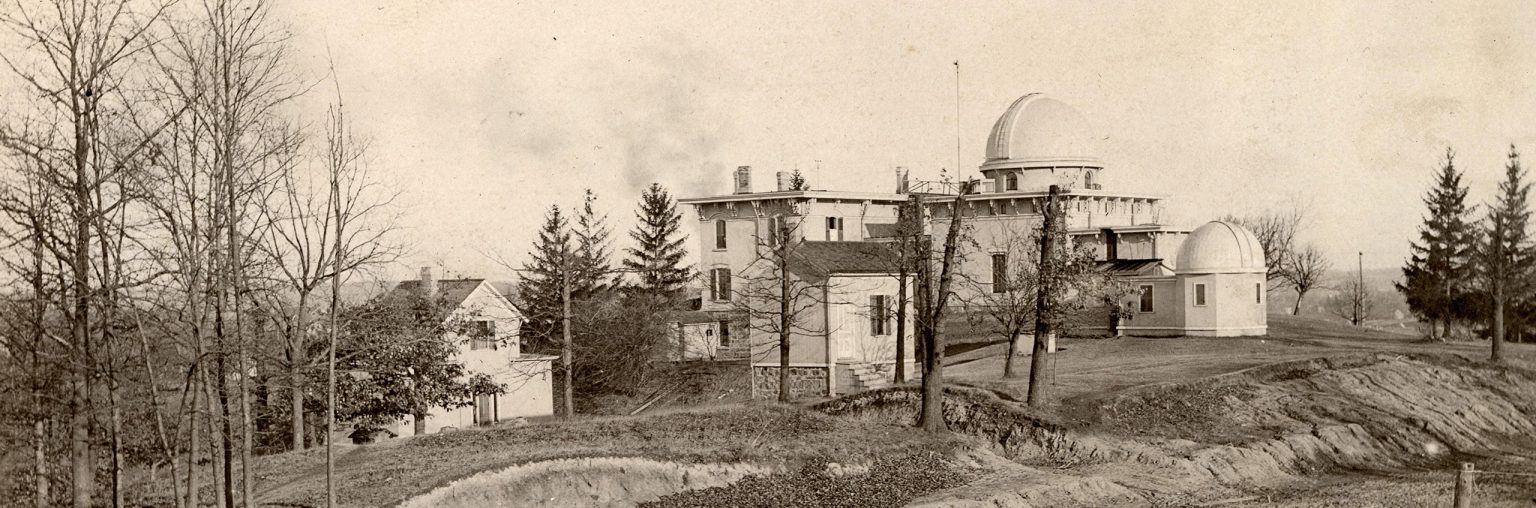
A photo of Detroit Observatory around 1902.

Detroit Observatory, ca. 1902 (Ralph Russell Tinkham papers, HS5888)

Tips for Searching the Database

Learn how to optimize your search to get the results you’re looking for.

On This Page:

  • Starting Your Search
  • Types of Sources
  • A Note on Metadata
  • Campus Location
  • Coverage Period
  • Unit

Starting Your Search

Keyword searches are based on project and publication metadata. This includes information like title, author, unit, description, and format.

The History of U-M search algorithm looks for matches between keywords and project and publication metadata. This differs from internet searches, like Google, that rank results based on relevance, which is largely determined by the number of users that click on a given result.

Users looking for exhaustive results are encouraged to perform multiple searches using different but similar keywords related to their topic. For example, someone interested in Black civil rights activism on campus might perform additional searches using similar keywords, for example “African American civil rights movement.”

Types of Sources

The database contains projects and publications.

Projects are online interpretive accounts of university history. This includes exhibits, websites, timelines, and repositories. In some cases, these are online versions of physical projects or events. To set feasible boundaries for this project, this list only includes projects by the U-M community. Note that projects do not include collections of data or repositories of sources, but the project team has highlighted some commonly referenced sources on the Explore Further page.

Publications are curated from a list of secondary literature dealing with U-M history in whole or part, including academic and popular books, dissertations, edited volumes, and articles from academic journals. These were gathered from thousands of entries in the U-M Library catalog, focusing on interpretive accounts, including internally authored histories and reports, but avoiding records, directories, and articles from popular periodical media (e.g., Michigan Daily, Chronicle of Higher Education). The project team has highlighted popular periodicals with frequent articles on U-M history on the Explore Further page.

A Note on Metadata

Metadata were identified by the team that selected the resources included in the History of U-M website.

Project metadata fields were populated based on careful review of project content; the project description was written by members of the project team. Publication metadata fields were populated by the project team based largely on each publication’s listing in the U-M Library catalog.

Campus Location

Users can filter results pertaining to specific University of Michigan campuses.

Each project and publication includes a metadata field indicating the campus(es) to which it pertains: Ann Arbor, Dearborn, Flint, and/or Michigan Medicine.

A note on dates: The University of Michigan was founded in 1817 and moved from Detroit to Ann Arbor in 1837. The Medical School opened its doors in 1850, and the first University Hospital was established in 1869. The University of Michigan-Flint dates to 1956; the University of Michigan-Dearborn traces its roots to 1959.

Coverage Period

Users can filter results based on specific years.

Each project has a coverage period that defines its primary temporal focus. This includes a start and end year as determined by members of the project team. For example, a project on the history of campus anti-Vietnam War activism might have coverage dates 1965-1972, though it might include brief mention of antecedent anti-war activism on campus (e.g., World War I and World War II). Coverage period applies only to projects, not publications.

Unit

Users can filter results based on the project’s institutional author.

Each project has a unit, an associated institutional author representing the university entity under whose aegis the project exists. In some cases, it is the affiliation of the project’s creator, usually an academic department or college. In other cases, it is the entity that commissioned, sponsored, or conducted the project.

Stay Connected to U-M History

#historyofum

Open post by umichbentley with ID 18059554988729879
Did you know there’s a Summer Game badge for exploring Ann Arbor’s Japanese History? 

As you explore Ann Arbor for the @aadlgram Summer Game, discover how Japanese emigrants and their descendants, known as Nikkei, have been an essential part of the Ann Arbor community for decades. 

Around World War II, the University of Michigan hired Nikkei employees to staff places like the Michigan Union. But during that same time period, U-M also excluded the majority of Nikkei from becoming students here. The U-M Center for Japanese Studies and Bentley Historical Library have teamed up to put together some clues to help you learn more about this chapter of Japanese-Ann Arbor history with this web-based badge. 

Take a moment to explore this local history, and claim this badge with your newfound knowledge!

Check out this URL to learn about the badge, and sign into your Ann Arbor District Library account to see clues: https://aadl.org/node/671037

New to the Summer Game? Visit aadl.org/play to learn more!

#SummerGame #AADL #Nikkei #AnnArbor
Open post by umichbentley with ID 18448615273141151
#TBT to Nickels Arcade in the 1930s!

Imagine walking through Nickels Arcade back when this photo was taken! You can spot some changes here between the early arcade and the arcade you know today. 

The shape of the glass skylight has changed, and the lollipop-shaped "penny scale" that used to stand at the entryway, against the central column, is no longer there. 

In the 1930s, passers-by would insert a penny into that penny scale to get a printed card with their fortune, an estimate of their weight (this particular scale was known for being highly inaccurate), and a printed photo of a movie star. 

While some things have certainly changed, some remain the same; you can still spot the same stone-colored terracotta decorations on the walls, and the same decorative brickwork! 

Nickels Arcade has become a beloved local building since the first business opened inside it in 1915. You can find this photo, and others like it, in the Ivory Photograph collection at the Bentley, which is digitized and available online for anyone to explore!

#AnnArbor #NickelsArcade #LocalHistory #1930s
Open post by umichbentley with ID 17979654534047816
Meet research fellow Frank Cirillo! As a historian who specializes in anti-slavery research, Frank is deeply interested in the impacts of the anti-slavery movement, known as abolitionism. 

He is fascinated by the ways that abolitionist language shaped later groups, such as the suffrage movement! 

Building on his previous book, "The Abolitionist Civil War," Cirillo visited the Bentley's reading room to explore how other progressive movements reused anti-slavery rhetoric for their own ends, between the Gilded Age and World War I. 

His project looks at "how abolitionist leaders were co-opted, their methods copied, and their words quoted to support different causes," in his own words.

The peace, temperance, and suffrage movements all interest Cirillo for that reason, showcased in collections like the Jabez Thomas Sunderland papers, the Rebecca Shelley papers, and more, from the archives here! 

Cirillo intends to use his latest research to write about the crucial impacts of the anti-slavery movement on later social reform! 

#Archives #AntiSlavery #Abolitionism #MichiganHistory #ResearchFellow
Open post by umichbentley with ID 18118112716836256
Happy Fourth of July from the archives! This photo of an early Fourth of July parade was taken #OTD over 100 years ago in Manchester, Michigan. 

At the time, buildings on the parade route were decorated with ribbons, draped fabric, and American flags. You can see a marching band, including a tuba and a large drum, parading on the right side of this image! 

If you look closely, you can also spot a child who appears to be holding his father’s hand while they watch the parade together, near the center of the photo.

You can find this 1896 parade photo, and other early images of Michigan, in the Sam Sturgis photograph collection at the Bentley.

We hope you have a wonderful Independence Day! 🎆

#4thOfJuly #MichiganHistory #IndependenceDay
Open post by umichbentley with ID 18486028588102714
Did you know that this historic U-M observatory hosts free events in Ann Arbor? 

The Frankel Detroit Observatory is the second oldest building at U-M, and it serves as a local museum. It is also part of the Bentley Historical Library! 

Anyone is welcome at these upcoming events in July to enjoy free history talks, walking tours, and more. 

Click through to see a list of upcoming events, and check out the Judy & Stanley Frankel Detroit Observatory website for details!

#UMich #AnnArbor #HistoricBuilding #Museum #UpcomingEvents
Open post by umichbentley with ID 18124434499659879
Our new website is coming soon! ⭐

We’re excited to share that our new and improved Bentley Historical Library site will launch on July 16, 2026, featuring: 

🔎 Even more ways to discover Michigan history

📖 Additional resources and help for researchers

🎨 A better design and a fresh, new look

Stay tuned, we can’t wait to share it with you! 

#Update #NewWebsite #ComingSoon
Open post by umichbentley with ID 17944808433216941
This photo of U-M's Burton Memorial Tower was taken #OTD in 1937! 

The bell tower itself was brand new at the time! It was dedicated just one year before this picture was snapped. 

Named in honor of U-M's former president Marion Burton, this tower was built to house a large and remarkable set of bells known as the Baird Carillon. 

Those bells were named for U-M's first Athletic Director Charles Baird, who gave them to the university. The largest bell weighs 12 tons! 

The music of these bells has been enjoyed by many generations of students in Ann Arbor, and the clappers of the bells are getting an important upgrade this summer. The bell tower itself turns 90 this year! 🎉

You can find this photo and others like it in the digitized Ivory Photograph collection from the Bentley, hosted online by U-M's Library. You can also learn more about the long history of this building with the Buildings and Grounds Department records, available for anyone to explore in our reading room!

#AnnArbor #UMich #LocalHistory #1930s
Open post by umichbentley with ID 18111798511926266
#TBT to this early view of Hill Auditorium! 

Hill Auditorium was first dedicated on this day over 100 years ago! The ceremony was held on Alumni Day during U-M's commencement week in 1913, alongside alumni receptions, baseball games, and class reunions. 

It began with a bugle call, and included a grand parade! 🎺 According to the Michigan Daily at the time, the Hill Auditorium dedication parade featured “faculty, regents, and distinguished guests” from “universities all over the globe,” followed by hundreds of alumni. 

"On either side marched a guard of honor composed of 100 seniors, each carrying a Michigan flag,” the Michigan Daily reported. “Behind came graduating classes attired in caps and gowns and headed by a drum corps." 

You can find more historical photos of Hill Auditorium in the archives at the Bentley with collections like the U-M Photograph Vertical Files and the Ivory Photo Collection, both featured here. 

Anyone is welcome to visit and view photos like these in our reading room, and you can also explore historical photos of Ann Arbor with the digitized Ivory Photo Collection online! 

#OTD #AnnArbor #HillAuditorium
Open post by umichbentley with ID 17928465549346264
#OnThisDay in 1972, Title IX opened the door for women’s varsity sports at U-M! In honor of the landmark moment when Title IX was signed into law, here’s a look back at U-M women’s athletics in the 1970s. 

This was a pivotal time for women’s sports at the University of Michigan. U-M women’s varsity teams for field hockey, volleyball, basketball, synchronized swimming, tennis, and swimming and diving all started in the 1973/74 academic year! 

That decade would go on to see the start of women’s varsity teams for gymnastics, golf, softball, track, and cross country. More teams were added as the years went by, including sports such as soccer, rowing, water polo, and lacrosse. 

You can learn more about how women’s sports at U-M have changed over time with the article “Equal Footing” by Katie Vloet on the Bentley’s website. This article features our amazing volunteer Alyce Sigler, who was a top U-M athlete when she was a student, and who now researches Title IX in the archives! 

Are there any women’s sports at U-M whose history you’d like to know more about? Let us know! 

#TitleIX #OTD #1970s #WomensAthletics
Open post by umichbentley with ID 18357870283214839
In honor of Juneteenth, meet Henry Lincoln Johnson, one of the many U-M alumni impacted by the history of slavery.

Born in Georgia to parents who had been formerly enslaved, Johnson earned his Bachelor's degree from Atlanta University, then traveled to Michigan to study law in 1890. He arrived in Ann Arbor many years before the Law Quad ever existed.

The early Law building, where he attended classes, was located near the corner of the Diag between South State Street and North University Avenue. As one of few Black students at U-M at the time, his time here was likely a lonely experience. Despite this, he was a dedicated student, and was later well known for his skills as a persuasive public speaker. 

After graduating in June of 1891, Johnson went on to become the first Black lawyer to practice in Jackson County, Georgia, and an influential politician. 

He was appointed by President Taft as the Recorder of Deeds for the District of Columbia. However, when he was renominated as Recorder of Deeds in 1920, his nomination was defeated due to a vocal group of white politicians who resented his influence.

He went on to push back against discrimination in the court of law on behalf of many Black defendants who faced biased accusations. 

Today marks the anniversary of the day enslaved African Americans finally gained freedom. On this day, we remember Henry Lincoln Johnson, and everyone harmed by the legacy of slavery. 

#Juneteenth #BlackHistory #UMich #AlumniHistory #1890s
Open post by umichbentley with ID 17985534747007738
The Power Center for the Performing Arts is a beloved Central Campus building that hosts all kinds of shows! 

But did you know that the Power Center parking structure is also where the "Top of the Park" concert series started in Ann Arbor over 40 years ago? 

Ann Arbor locals may remember walking up to the top of the parking structure next to the Power Center, and sitting in metal folding chairs to watch open-air screenings of movies and live music! 

There, interrupted only by the occasional low-flying plane or scattered rain shower, they would watch Charlie Chaplin films and modern movies, enjoy things like jazz performances, and have what the 1985 Michigan Daily called "a pretty grand time." 

In 2006 Top of the Park moved to the wide expanse of Ingalls Mall due to construction on the parking structure. The larger space proved useful for this growing celebration, and Top of the Park can still be found on Ingalls Mall this year. You might know it as the outdoor portion of the Ann Arbor Summerfest, or A2SF! 

You can find this photo of the Power Center, and others like it, in the News and Information Photograph Collection at the Bentley Historical Library, which anyone is welcome to explore in our reading room. 

You’re also welcome to re-create historical photos from the archives, among other fun activities, at the A2SF booth for U-M’s historic Frankel Detroit Observatory this afternoon, June 18, starting at 5:00 PM in the Annex near North University Avenue! 

#AnnArbor #LocalHistory #TBT #PowerCenter #TopOfThePark #A2SF #AnnArborSummerfest
Open post by umichbentley with ID 18133041265604088
Meet Charlotte Brivio! ⭐ Charlotte is fascinated by the history of women's advocacy for the right to vote. She has been exploring this amazing history in the archives as a research fellow at the Bentley! 

As part of her PhD in American History at the Sorbonne Université, Charlotte is delving into the lives of women across the United States who tried to cast their votes around the 1870s, many years before women were finally granted the right to vote.

These women hoped to have their votes challenged, in order to be brought to court and argue for their right to vote, Charlotte explains. Her research reveals hundreds of women who tried to vote this way!

One of those women was Sojourner Truth, whose life Charlotte has explored in the Berenice Bryant Lowe papers here, full of newspaper clippings, letters, photos, and even a scrapbook. 

Another was Nannette Gardner, a widow in Michigan who successfully voted in 1871, and whose papers contain things like a diary entry from her daughter, describing how her mother brought a bouquet and a banner to the polls. 

Although this method of trying to win the vote for women is often seen as part of Susan B. Anthony and Elizabeth Cady Stanton's overall strategy, Charlotte's research shows that it is actually also a grassroots strategy that was used independently by women across the country!

She notes that, after independent women tried to vote in this way, Stanton and Anthony would often arrive after the fact to try to claim that woman's vote as part of their movement, sometimes without even crediting their names. Charlotte is exploring how historical media depicted this strategy for women's right to vote in her dissertation! 

Interested in learning more? Anyone is welcome to explore historical Michigan newspapers, the Nannette Gardner papers, and the Berenice Bryant Lowe papers in our reading room, which is free to visit and open to all. 

#Archives #MichiganHistory #SuffrageMovement #ResearchFellow #SojournerTruth #NannetteGardner #1870s

Hidden title

Improve the History of U-M website

Collaboration is essential for this project, and we want to hear from you.

Do you have a resource we missed? Is there information we need to correct, or more information we could add? Please let us know!

Contact Us

Partners

The History of U-M website is an ongoing collaboration between the Bentley Historical Library and the Inclusive History Project.

Learn About This Website

© 2026 Regents of the University of Michigan | Land Acknowledgment Statement

History of U-M logo
Secret Link