
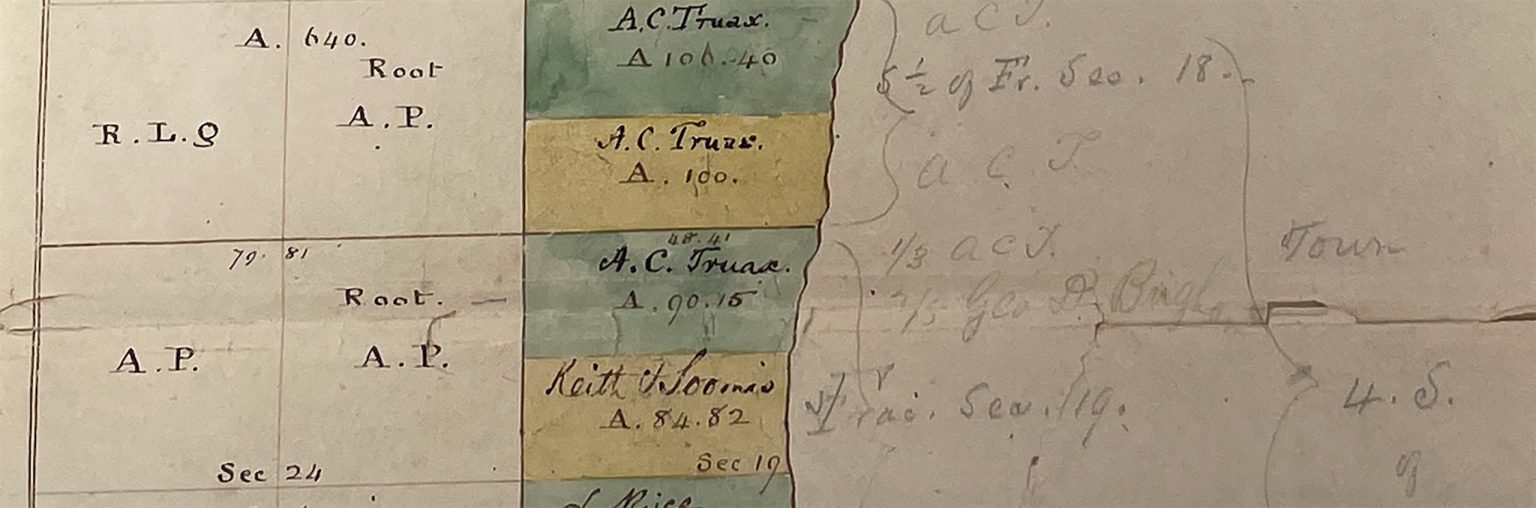
A drawing of U-M landholdings along the Detroit River in today’s Trenton, Michigan, which were acquired via the 1817 Treaty of Fort Meigs, ca. 1824 (Board of Regents (U-M) records)
The 1817 Project: Land, Culture, Memory, and Repair
The Inclusive History Project’s 1817 Project: Land, Culture, Memory, and Repair bridges past, present, and future to explore U-M’s connections to Indigenous land and settler colonialism, as well as contemporary issues of Native American student experience, campus inclusivity, and student activism.
One of several ongoing initiatives within the Inclusive History Project (IHP), the 1817 Project revolves around the foundational land transfer by the Ojibwe, Odawa, and Bodewadami nations in the 1817 Treaty of Fort Meigs (also known as the Treaty of the Maumee Rapids) that was part of the university’s origins in Detroit and subsequent relocation to Ann Arbor. Work on the 1817 Project includes deep, collaborative research into the early history of the university and Michigan territory, and also how this history has been represented, occluded, contested, and addressed through more recent legal challenges, Native student activism, and statewide forms of legislation since the 1970s (e.g., the Michigan Indian Tuition Waiver). To present a deeper and more accurate history of the university, the project will host two national conferences, produce scholarly and public-facing publications, curate exhibitions, and organize several talks and presentations.
The 1817 Project research team has created resources to share information about the university’s early land possessions. Visualizing the History of the University of Michigan’s Early Land Possessions illustrates how U-M leveraged landholdings acquired through the Treaty of Fort Meigs as a strategic tool for institutional growth and development. The 1817 Treaty of Fort Meigs and the University of Michigan: How Indigenous Land Became Institutional Property is an ArcGIS StoryMap that places U-M’s acquisition of Anishinaabe land through the Treaty of Fort Meigs within the broader context of American westward expansion and the federal government’s property formation system, which transformed Indigenous land into private and institutional property.
Project Overview
Creator
Eric Hemenway, Bethany Hughes, and Michael Witgen / Inclusive History Project
Format
Project
Publication year
2024-Present
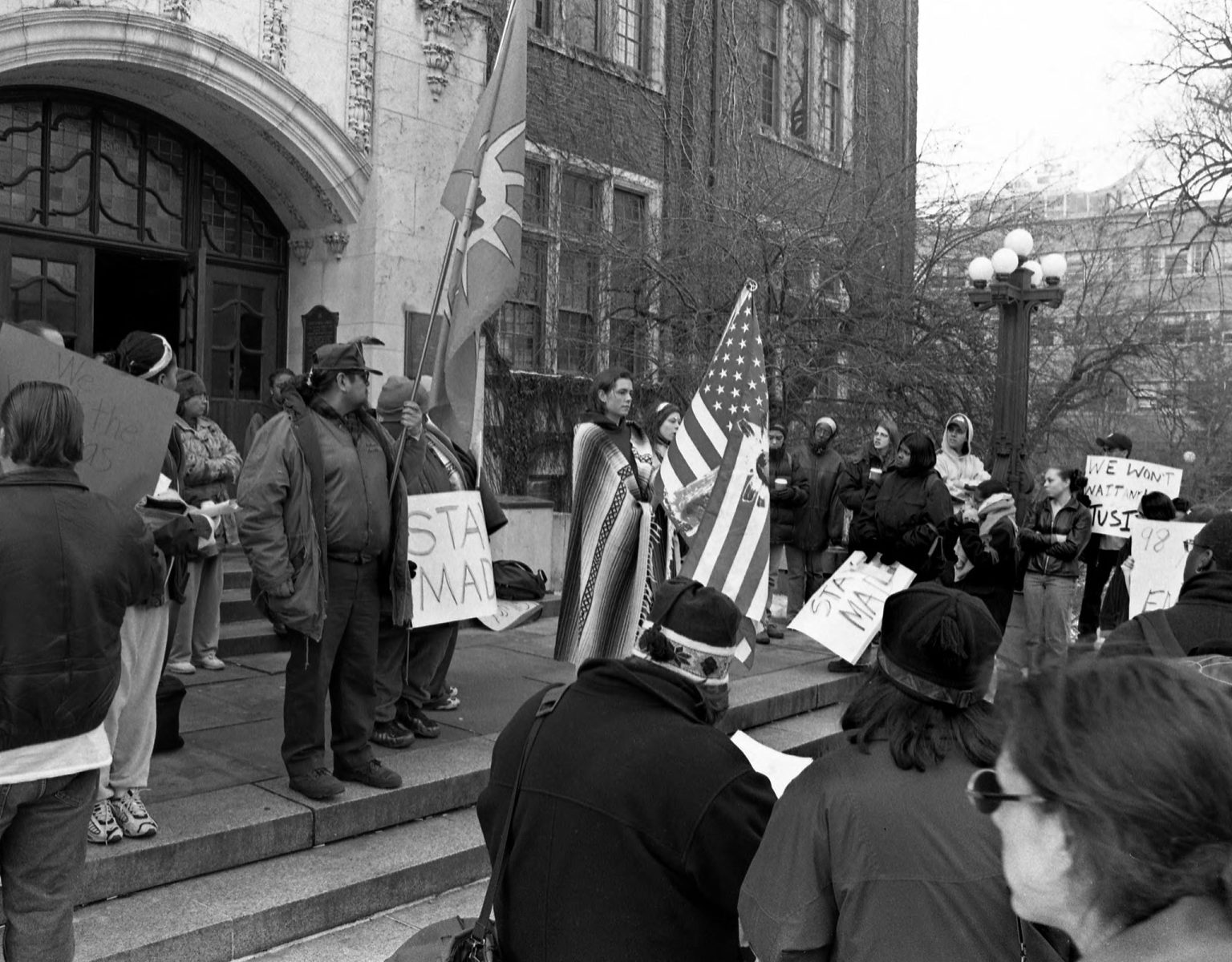
Students protesting against the Michigamua Senior Society at the front entrance to the Michigan Union, 2000 (University of Michigan News and Information Services Photographs, HS17784)


